Business License

Counting which cities are prone to backflow and waterlogging during rainstorm, what role can the bui
Rainstorm and waterlogging become more and more frequent?
Why are these cities constantly being targeted by 'backflow'?
In recent years, extreme rainfall events have occurred frequently, with many cities experiencing one
Rainstorm can "see the sea"!
Behind the frequent occurrence of urban waterlogging, in addition to drainage capacity issues, there are also problems with river water
'Backflow' is also an important inducement.
This time, let's take a look together
Which cities have experienced severe flooding and waterlogging?
What role can the "black technology" of anti backflow device play?
1. Wuhan: In July 2020, Wuhan experienced continuous heavy rainfall, with a cumulative rainfall of over 800mm. The water level at the Hankou Station on the Yangtze River exceeded the warning line by 1.5m, and the Hankou Jiangtan Park was completely submerged. The water depth in Guanggu, Wuchang reached 1.2m, causing traffic paralysis in the city. More than 200 places in the city were severely flooded, and 200000 people were affected. The direct economic loss was about 5 billion yuan.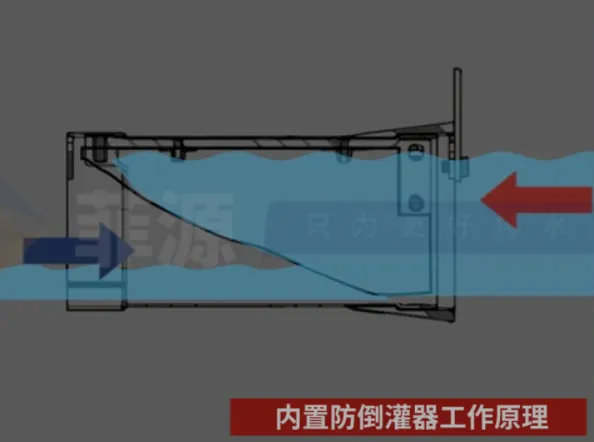
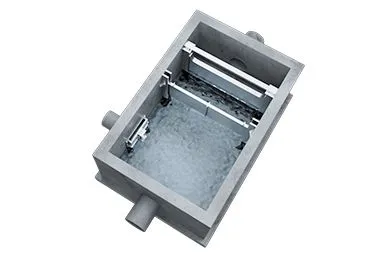
Built in anti backflow device
2. Zhengzhou: On July 20, 2021, Zhengzhou was hit by the "once in a thousand years" extreme rainstorm, with the maximum hourly rainfall of 201.9 mm (breaking through the historical extreme value of Chinese Mainland), and the 24-hour rainfall of 624.1 mm, equivalent to 60% of the annual rainfall. During the rainstorm, the water level of the Jialu River soared to 93.3 meters (3 meters above the warning level), and the urban rainwater could not be discharged into the river by itself, resulting in a direct economic loss of 120 billion yuan.
Built in anti backflow device
3. Shenzhen: During Typhoon Xianba in 2022, 2 meters of water accumulated on Minzhi Avenue in Longhua District, Shenzhen, and some vehicles were washed away. The Buji River in Shenzhen overflowed and flowed back into the municipal pipe network during the rainstorm. During Typhoon Dujuan in 2023, the water level in Shenzhen Bay flowed back into Yantian Port.
4. Beijing: During the "July 21" extremely heavy rainstorm in 2012, the average rainfall in the city was 170 mm, in Fangshan District it was 460 mm, and the ponding in Guangqumen Bridge was 4 meters deep. During the rainstorm, the water level of Yongding River rose, causing the drainage of Liangshui River and other tributaries to be blocked, and the external river water flowed back into the municipal pipe network, causing waterlogging in low-lying areas.
5. Shanghai: During the 2021 typhoon "Fireworks", the high tide level of the Huangpu River reached 5.75 meters (exceeding the warning water level by 0.3 meters), and the Century Avenue Station in Pudong was flooded by 1 meter. The typhoon combined with astronomical tides, the water level of the Huangpu River was higher than the urban area (the ground elevation of Lujiazui in Pudong was 4.5 meters), and the drainage outlet was severely flooded. The water pressure in the municipal pipeline network was high, causing overflow and blowout phenomena.
6. Chongqing: In June 2020, the 24-hour rainfall in Shapingba District reached 250 millimeters. The rising water level of Jialing River caused severe backflow from the drainage outlets of tributaries such as Qingshui River and Liangtan River, resulting in waterlogging in some areas.
7. Hefei: In the rainstorm in June 2022, the water level of Nanfei River exceeded the warning level by 1.2 meters, and the submerged mountain road around Swan Lake accumulated water by 1.5 meters, causing traffic paralysis in the administrative area. During the rainstorm, the flood discharge of Dongpu Reservoir and the high water level of Nanfei River overlapped, resulting in the reverse water inflow at the urban outfall.
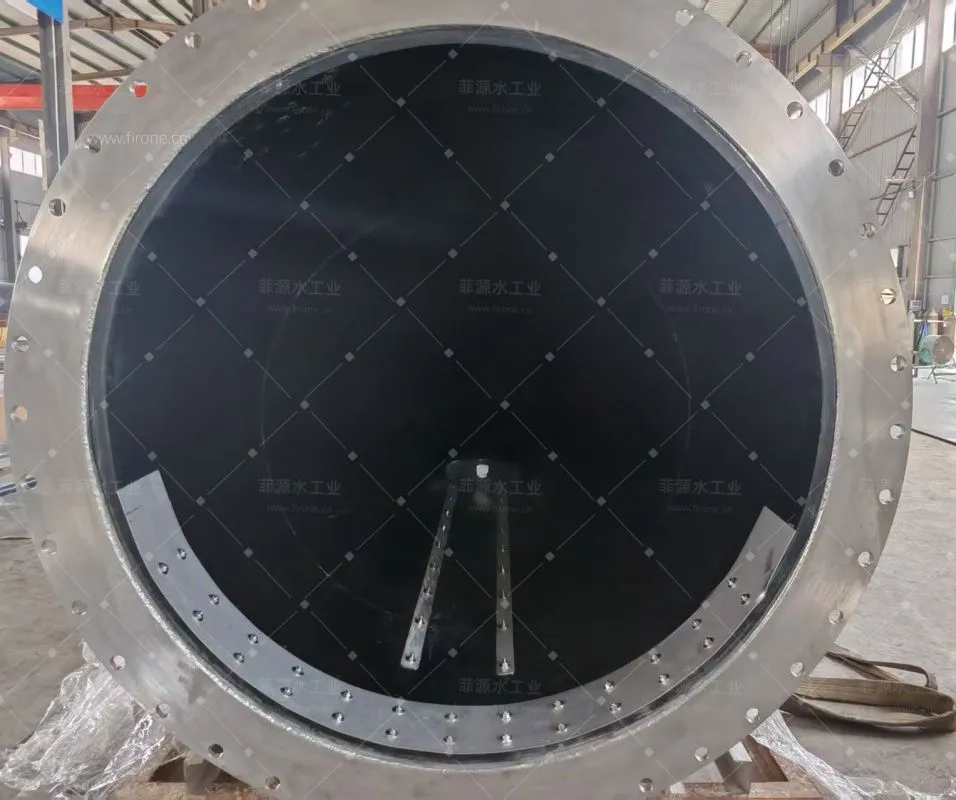
Built in anti backflow device
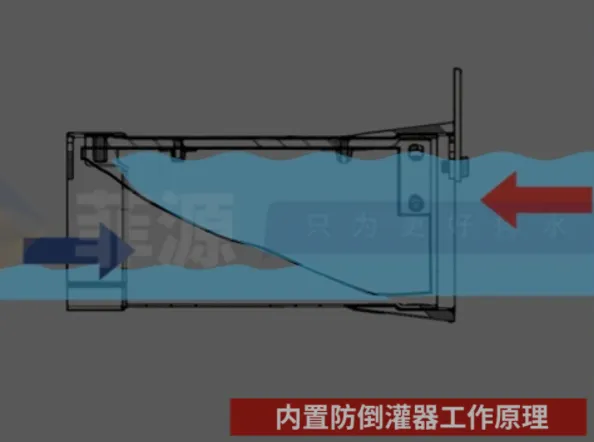
Working principle of built-in anti backflow device
Positive drainage: When the water pressure inside the pipeline exceeds the water level of the external river, the membrane flap of the built-in anti backflow device in the pipeline opens under the action of water pressure, and normal drainage occurs.
Reverse anti backflow: When the water level of the outer river rises, the water pressure presses the membrane disc tightly against the stainless steel shell to prevent the outer river from flowing back into the municipal pipeline network.
Built in anti backflow device
Design strategy for preventing backflow in municipal drainage system
Wuhan Yangtze River/Hanjiang River junction area: a medium-sized built-in anti backflow device is installed at the drainage outlet. When the water level of the Yangtze River exceeds the drainage outlet in the event of a rainstorm, the built-in anti backflow device automatically prevents the external river water from flowing backward into the municipal pipe network. No other external power is required, and the pump station is used for forced drainage (80% of the water volume can be reduced).
Along the Huangpu River in Shanghai: The drainage outlet adopts a multi specification pipe medium-sized built-in anti backflow device design to resist storm surge roof support (such as during the 2021 typhoon "Fireworks", which can prevent 70% of the tide from flowing into the subway tunnel).
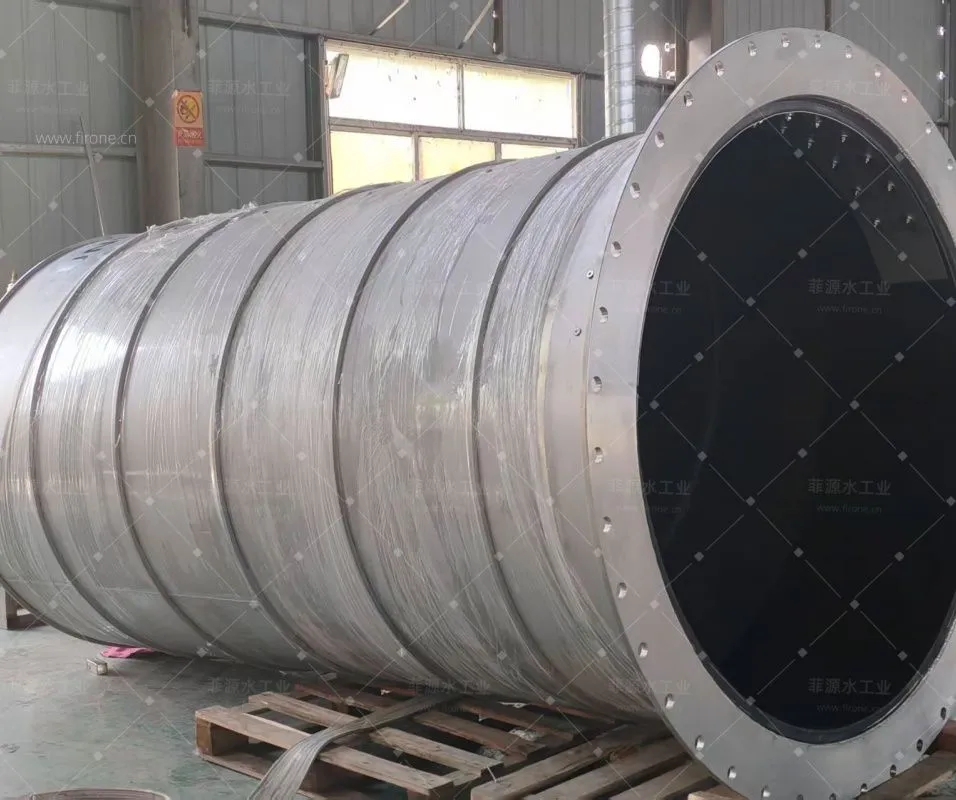
Built in anti backflow device
Along the Jialu River in Zhengzhou: When the water level of the Jialu River exceeds the drainage outlet along the river, a built-in anti backflow device automatically prevents the backflow of external water into the pipeline network, combined with pump station pumping (if activated during the 2021 "7.20" incident, it can reduce tunnel water inflow by 50%).
In the Jialing River tributary area of Chongqing, a medium-sized built-in anti backflow device is used. Under the action of pulse, the accumulated sediment will be washed away at the moment when the anti backflow device is opened for drainage, which can effectively improve the shooting efficiency. When rainwater converges and causes the water level of the outer river to rise, the membrane flap of the built-in anti backflow device is in a closed state, which can effectively prevent the backflow of outer river water.
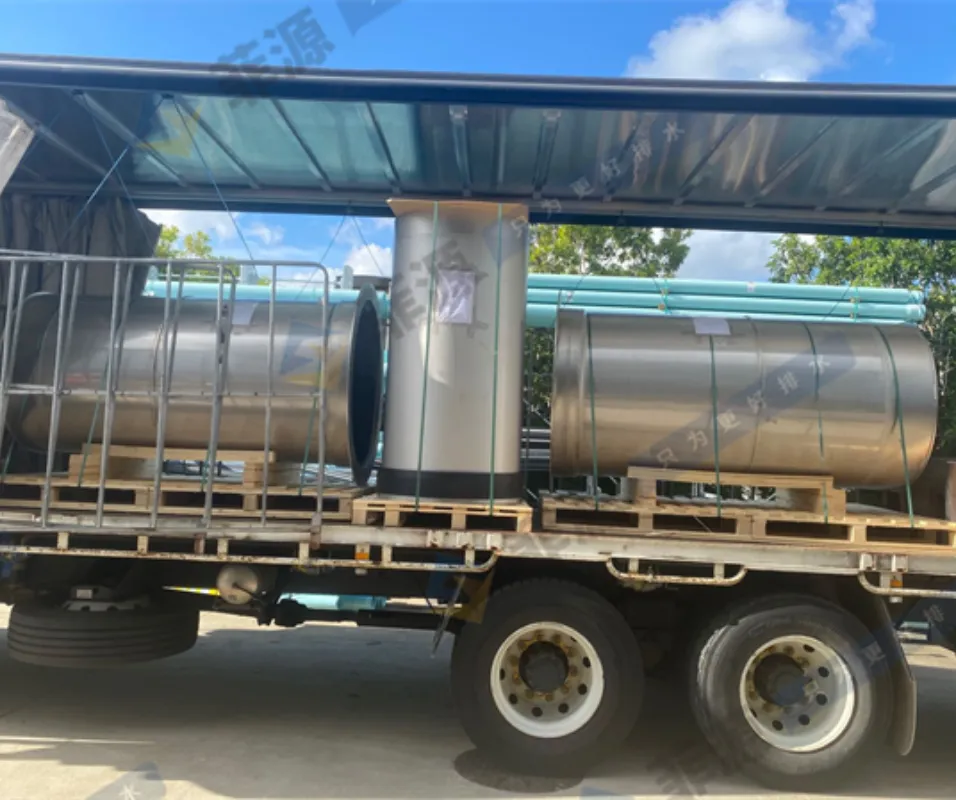
Built in anti backflow device
Typhoon Zone in Guangzhou/Shenzhen: When the short-term rainfall is too strong, the closure of the built-in anti backflow device may cause a sharp increase in the pressure of accumulated water inside the pipeline network. It is necessary to combine regulating reservoirs (such as the Shenzhen Dashahe regulating reservoir with a capacity of 500000 cubic meters) to alleviate instantaneous loads.
Hefei: A plain river channel with relatively small water level fluctuations in Nanfei River. Built in anti backflow devices are installed at the drainage outlets along the river. When the water pressure inside the pipeline is greater than that of the outer river, the pipeline can drain normally. However, when the water level of the outer river rises rapidly due to short-term heavy rainfall.

Contact Us
Recommended Products
-
 Fully Automatic Vertical Spiral Grid Machine Garbage Squeezing and Conveying DeviceUS$ 26000 - 30000MOQ: 1 Combo
 -
No Need for External Power Sewage Treatment Equipment DN800 Volute Vortex Flow RestrictorUS$ 28800 - 30000MOQ: 1 Combo
-
Integrated PE Prefabricated Pump Station, Featuring Various Diameters, is a Factory-fabricated Integrated Pump StationUS$ 130000 - 150000MOQ: 3 Combos
-
Supply Feiyuan Water Industry Vertical Spiral Screen Machine Dry and Wet Separation Conveying EquipmentNegotiableMOQ: 1 Combo
-
Fiyuan Water Industry Integrated Sewage Lifting Pumping Station Manufacturer, Integrated Sewage Pumping StationUS$ 29800 - 30000MOQ: 1 Combo
-
A Check Valve Suitable for Drainage Outlets in Coastal Areas, Focusing on Preventing Backflow as a Check Device, Which Can Effectively PreventNegotiableMOQ: 1 Pound
-
Feiyuan Prefabricated Concrete Interception Well Hydraulic Downward Opening Barrier Gate, Floating Baffle, Hydraulic Limiting Gate Combination Intelligent Interception WellNegotiableMOQ: 5 Bags
-
Feiyuan Integrated Drainage Pump Station HMPP Material Pump Station FYPS Model Pump StationNegotiableMOQ: 5 Pieces
-
Feiyuan Water Industrial Integrated Drainage Pump Station HMPP Pump Station Stainless Steel Rainwater Lift Pump StationNegotiableMOQ: 5 Pieces
-
Manufacturer of Integrated Sewage Lifting Pump Station for Feiyuan Water Industry, Integrated Sewage Pump StationNegotiableMOQ: 5 Pieces